Welcome to my online portfolio!

I'm a writer living in St. Petersburg, Florida. I was raised in rural Maryland, just north of Baltimore City.

Here you'll find short stories, sample articles, and publication links.

I'm also found on: Pexels, a free stock photo sharing site, Redbubble, an indie artist hub, and YouTube, the largest internet video sharing website.

Sunday, February 19, 2023

80% Challenge Continues

 I'm only 80% on this new blog post as well. What I would have liked to see, to make this something I was 100% happy with, would be more quotes and maybe referencing one of the many self-help books I've read that helped me come to terms with our lack of relationship, such as this one here.

Actually, you know what, I just added a link to that book at the end of the Medium post. Hooray. I still think it would improve my work if I had some quotes from the book in there, but that 20% difference wasn't part of the challenge. The challenge was to post something only when I'm 80% happy with it, so here it is below. 


This is also available on the side bar in the Medium section of the menu.

Please follow me on Medium.


My Mother, The Leopard

Photo by Pixabay from Pexels 

I always wanted a good relationship with my mother, but it’s always been strained. Anyone who’s been snubbed by their own mother will only naturally want to have that missing mother-daughter relationship in their life. It ties back to a deep biological need. It relates to safety and feelings of self-worth.

When I was little, she looked to me like this gorgeous goddess, one who was always too far out of reach. She didn’t want to spend time with me, and I felt burdensome, even from the youngest age. She was slim, tan, and sassy. It seemed like she was good at everything, and like I paled in comparison. It felt like I was playing catch up, trying to keep up with her talent and beauty, even though I was just a child. This didn’t feel natural, but I always held out hope that one day I would earn a place in her heart.

I had this big hole where our relationship was supposed to be, so naturally, even as I aged and began to see her as human, just like everyone else more or less, I still did things out of the hope that we would one day be close.

Despite my efforts to please her, every year we grew more adversarial.

In my 20’s, I felt a renewed hope that our relationship would turn a corner and that we could form a healthy adult-child and parent relationship. This was catalyzed by a single event, one that ultimately let me down and confused me in the moment. This memory left a smear of bewilderment and disappointment on my brain for years.

I must also mention that she was very abusive when I was a child and teen, but I have always been willing to put the past behind us, if we could move forward in a healthy way. The blame wasn’t entirely her own, as she lived through tremendous pain in her own upbringing in an abusive home, and the stress of her adult life was gargantuan. She couldn’t cope with her past or deal with the challenges of adult life without extreme emotional turmoil. Being a mom on top of what she was going through internally seemed like the worst thing for her.

After the economic crash of 2008 and a bad breakup, I found myself back in Maryland. It wasn’t a planned homecoming and I was, in many ways, more broken than I had been before. I had been through so much: graduating with my bachelor’s degree while also working full-time hours, then struggling to get a decent job with that degree, and finally, the heartache of betrayal within my failed romance. My heavy heart ran all the way home, even though there wasn’t much for me to go back to. The entire state felt unwelcoming, but I was going to give it a shot, and try for a fresh start.

We didn’t really get along when I got back. I offered to do things for her around her home, with my retail smile and responsible adult attitude. I put forth my best efforts to encourage a fresh beginning, for myself, and for us as a family. She acted hostile, as if I was the same lazy teenager she knew from several years before. I wasn’t. I tried to win her over, from a much cooler head and a place of maturity. She didn’t bite, and we failed to communicate or have many pleasant interactions.

So, I was a little shocked when my mother invited me to join her at Artscape, Baltimore’s giant festival of the arts, and an event that I had begged her to go to during my elementary and middle school years. Nevertheless, I decided to go with her, thinking she was trying to help me heal my sad heart.

I didn’t know it at the time, but I couldn’t have been more incorrect about her intentions.

We boarded the Light Rail in Hunt Valley early that morning. The ride was quiet at first. We spoke little, and it was awkward sitting next to her, as she always put me on edge. She was unpredictable, as the smallest perceived slight could make her explode in rage. Whenever I was around her, I monitored myself heavily, always mitigating my own emotions and tuning into hers instead. She sat stiffly, and continuously scanned the train car.

I read a book, as I often did, and with one eye, watched the train slowly fill with people from stop to stop, as we made our way south.

Finally, we reached our destination. The closed streets were lined with vendors in white tents and food trucks. Crowds of people meandered under the morning sun, while music and excitement were heard from all corners. It was a hot morning, and with the familiar buildings of Baltimore surrounding us, it felt like Charm City was alive and thriving. We stepped into the sunlight and merged into the masses.

“This is where they film Ace of Cakes,” she said proudly, as we passed a brick building.

“Oh, are they open?” I asked.

“No.”

At that moment, I thought I cracked it. I hadn’t heard of Ace of Cakes until earlier that month, when I saw her watching an episode in her living room. She told me the show had inspired her to take up cake decorating with fondant.

I figured that was it, we had made the journey so she could meet her new hero or at least see him in the flesh, but we never saw Mr. Cake Ace, at least not that I was aware.

We wandered from tent to tent, looking at all sorts of different arts and crafts for sale. It reminded me of a similar, giant crafts fair in Lancaster, PA, one that I had attended with a friend in high school, only five or six years earlier.

My mother acted as she always did. Her sentences were short and her words were curt, but she wasn’t entering any extreme highs or lows, so I let myself relax a little.

This experience was one of the only times we had done something together as mother-daughter in nearly a decade, and one of the first times we had done anything since I was a full-fledged adult. I side-eyed her and found she was basically the same. I could tell she was putting on a brave face in the sea of people, yet she still grabbed her purse with both hands when we found ourselves entangled in a dense part of the crowd. It was customary for her face to be puckered into a frown, and this day was no different. As long as I could remember, she always looks slightly disgusted, like she smelled sour milk.

Imagine, if you will, my utter shock, when she transformed before my eyes from the frowning, stiff-armed woman, into something completely opposite and out of character.

We found ourselves near the waterfront. Target in sight, she bunny hopped away from me without a word. She moved like some kind of mystical elf, hips swaying and neck forward, towards one of the larger tents. I watched from behind her, in bewilderment. Her face somersaulted into a smile, and her limbs became animated, rubbery, even. She had gone from reserved, stern, and sensitive, to happy, delightful, and dare I say, teenage-like.

My eyelids must have recoiled into my skull, while my head contorted to the side, resting at a cool 90 degrees. A cartoonish, “huh?” escaped my mouth without me even knowing. My lips opened into the shape of a train whistle, and I lingered like a deer, ready to bolt, but my legs rooted in place. I couldn’t help but watch in complete and outright confusion.

“Hi guys!” she said, in her most feminine of voices.

She galloped into the booth and wiggled behind the display table.

I was maybe eight feet away. I could see her chattering, her arms making large, round circles in the air, and her gleaming smile, but I couldn’t make out most of what she was saying, other than a few words that came out louder than others.

I closed the gap by two additional feet, but that was it.

Surely, she would introduce me, I mused.

One person behind the table stood out from the rest. He was a handsome man in his 20’s, with shaggy hair held under a baseball cap, arms full of tattoos, and noticeably large biceps.

My mother went on and on to this young man, who was around my age at the time, and he didn’t get many words in, nor did anyone else behind the table.

After another few minutes, with me watching her speak enthusiastically to these vendors, she bid them goodbye, and continued away from the tent and back the way we came.

“I know them,” she said, smugly.

“Who?” was all I could ask.

“We do stained glass.”

She gave a brief summary of the lives of the people to whom she was just speaking, not hiding the fact she was gushing over the one who was my age.

I said something to the tune of, “Oh, he sounds great.”

He was quite handsome, but I never thought my own mother could be hitting on someone over twenty years her junior, especially considering she had just married her boyfriend the year before. For the briefest second, I thought maybe she was trying to set me up with this age-appropriate person. Maybe she was feeling bad that the end of my relationship had left me in such turmoil. Maybe she was trying to do something nice?

No, the look on her face was the only confirmation I needed. She hadn’t thought of my situation with any compassion or empathy; she probably hadn’t thought of it at all, other than being annoyed that I was back. She glared at me and then rolled her eyes. Then, she muttered something nasty about my appearance and intelligence, her voice so low in tone, that I couldn’t understand all of it.

Heck, she couldn’t even be bothered to introduce me to any of her friends behind that table whatsoever. It was pretty rude, but at the time, my thoughts were too jumbled to even get that far. She had morphed back just as quickly to the mother I knew, back into the woman who was always unhappy and uncomfortable.

It hit me some ten years later, that the only reason she dragged my butt down there in the first place, was to brag. Something compelled her to show off she was hanging out with an attractive, successful 20-something artist, and his family.

Even though she birthed me, my mother treated me, at best, like an unwanted little sister, among other things. Her and my aunt, her own sister, were in constant rivalry. Her envy knew no bounds; her competitive nature was the frame of my entire childhood. I could do nothing without her learning to do it and do it better than me. If I wanted to get better at something, like drawing or computers, she would throw herself into it too, and then show off her new skills to anyone who’d pay attention, like my father, the neighbor, her friends from the college she attended when I was in elementary school, or her new husband.

I had gone into the day with optimism, and almost as a responsibility to look out for her in the big city, one that had scared her so much when I was a child. I thought we were really turning a corner and I had finally won her respect. I thought she was finally starting to see me differently. I felt she had considered the hardships I had been through, the obstacles I overcame in my rocky launch into adulthood, and saw me as someone she would like to be around.

No, she just wanted to brag.

We can go our entire lives and play out the same patterns, over and over again, but with different people. We can tell the same stories on repeat, and we can see little change in our own lives.

Can an Ethiopian change his skin or a leopard its spots? Neither can you do good who are accustomed to doing evil.” Jeremiah 13:23, New International Version (more on this proverb here)

I don’t want to live like my mother. Without having her love and support, I’ve had a hard time emotionally. With the abuse she doled onto me, I have a foundation of negativity and self-loathing. I hated myself for years because it was beyond her capacity to treat me like someone she valued. I twisted myself in knots, just trying to earn her love, and attempting to receive the tiniest bit of praise or positive attention. I had meltdowns on a regular basis, from the exhaustion of walking on eggshells constantly, trying not to upset her further, as she was already so miserable, and as my existence only made things worse in her eyes.

Even now, she still uses me as the scapegoat in her personal story. I’m the be-all-end-all apocalypse she turns to, the one she points the finger at, and the no-good arbiter of her bad luck. I show up in her stories whenever she needs to vent out whatever injustice the world has given her on a single day, though we haven’t spoken in years.

I refuse to be like this, although it’s been an uphill, endless battle.

There are many times I’ve slipped. I’ve been overwhelmed and shouted at someone, I’ve lied and gaslighted without meaning to, and I’ve ran for the hills from people who probably didn’t mean the harm they inflicted. I cowered from her when I was a child. When I was grown, I let others into my life who put their hands on me, and I cowered from those too, until I was able to make yet another escape.

Every day I have a choice to be better, to act better, and to never be envious or in competition with people over frivolous, surface-level nonsense. I give others the benefit of the doubt, and with an open, loving heart, I’ve still been sucked into worlds of negativity and pain. I end these relationships, after trying to save them one time too many, but I do end them.

My mother and I will never be close. I will never have her respect, just as she will never have her own mother’s respect. The difference is, she’s still after her own mother’s approval, but I’ve flushed the whole notion of getting hers from my reality. Though it may not be entirely impossible, earning her love is a goal I refuse to seek any longer.

I will always love her and be grateful for her, as she is one of the most fascinating people I’ve ever known. She’s a combination of puzzle pieces that will never fit together. She’s so cruel to most people she meets in everyday life, but she’s completely unaware of the hurt she inflicts on others. She complains constantly about people around her being oblivious, not conscientious, and entitled, yet she herself is noticeably rude.

She and her mother, my grandmother, both act the same in conversations. They sit quietly, waiting for their turn to speak, without having listened to a single word the other person has said.

Of course, I hope she grows. Her own childhood was awful, and no one deserves what she went through. She, like all of us, has a choice on how she will act in every moment. I wasn’t able to be what she needed, nor was she able to be what I needed, but that’s in the past now. The Artscape interaction, and the many other confusing interactions we had, are but symptoms of self-hate and a life ruled by jealousy and envy. If she could zoom out from her life, forget about all the negative experiences she’s been through, and look with fresh eyes, I wonder what she’d see.


 

Sunday, February 12, 2023

80% Challenge

 On 2/11/23, my mentor challenged me to publish when I was only at 80% certainty that an article was good enough for an audience. No more making them 100% perfect... no more not publishing them because I couldn't get every sentence 100% good.... no more putting things off, because I couldn't get my thoughts 100% worthy.... etc. 


Anywhooooom, I said, "Okay, you're on." 


In the coming weeks, you will see more activity here and on my Medium blog


Here is today's 80% effort (also found on the sidebar). This article is one I've been grappling with for a while now. I love having a positive mindset and the positive mindset I have feels like my true self. However, I have these days where my brain screams "THE SKY IS FALLING," and I truly believe that nothing will work out. This isn't me, but on those days, it's the only "me" between my ears.


Then, I read The Chimp Paradox (...okay, listened to it), and the pieces came together. On these days, my inner chimp was taking me for a chump, and defeating my human-brain, defeating my true self. But hey, I survived some horrific crap in my life, as have most of us, in one way or another, so my inner chimp is strong. Your inner chimp may be strong.


My inner chimp is a worthy foe and no wonder she wins every once in a while.


So, I wrote the following and I was finally able to finish it.... somewhat... 80% at least. 


Thanks in advance for reading:


When the Positive Mindset Fails

Photo by Lamar Belina from Pexels

Sometimes, the positive mindset fails and our weaknesses are exposed. When it happens to me, I find it devastating, like my entire world is crashing down, seemingly out of the blue. Maybe it’s due to something going on in my environment, maybe it’s due to negative thoughts being suppressed rather than addressed, or maybe the cause is hormonal, but no matter the culprit, it always takes me off guard.

By far, the two most important life lessons I have learned are: to challenge negative thoughts and to keep that positive mindset, no matter what. I’m determined to be an optimist and push myself to accomplish things, with the hope that what I do now will impact the future. Most days I believe, but there are still ones when I don’t.

Even though I want to believe in myself every day, there’s times when I feel absolutely worthless, like I’m being crushed by an invisible, unmovable weight. This is likely rooted in childhood, as it was reinforced by abusers and bullies that self-belief was incorrect. It was hard to break the patterns of negative thinking, as this was my default world-view for over twenty years. It was a nasty companion, one no longer welcome in my world.

However unlikely it was from my upbringing and formative environment, I’ve built a positive, optimistic mind and duel those negative thoughts when they reveal their ugly, little heads. My therapist is adamant I challenge all negative thoughts, but some days, for seemingly no reason, they still seem to win. So much of my life is like a pendulum, as soon as I feel like I’m finally close to what I’m seeking, I drift backwards to where I used to be, everything getting smaller and out of reach, while doom and gloom amplify.

In The Chimp Paradox, Dr. Steve Peters says we all have a self-critical chimp living within our heads. Our chimp is our petulant, emotional inner-child, whose self-worth is tied to surface level concerns, such as the importance of our job, our level of physical attractiveness, and our popularity. When we measure with this aspect of our mind, we see our self-worth grow and shrink, depending on circumstances or whom, specifically, we measure ourselves against. Dr. Peters also points out that our human brain, unlike our chimp brain, shows us who we want to be in life. When we use our human brain to assess our self-worth, we base our esteem on the fundamental ideal that we can only ever do our best.

“The human is likely to say that everyone is equal in value, and that although we possess different skills and abilities, the overall belief is that all are equal as humans. The chimp will say that everyone is at a different level, and some people are better than others, with power, looks, and possessions being very important.” -Dr. Steve Peters in Chapter 16 of The Chimp Paradox

Dr. Peters uses metaphors throughout the book, also mentioning the goblins and gremlins that inhabit our minds, living with our inner chimps, so to speak. Some thoughts, gremlins, can be fought and defeated. Other beliefs, our goblins, tied to our earliest childhood experiences, have to instead be contained.

When I get into that negative mode I can’t shake, in the back of my mind, I’m comparing myself to others or comparing myself to an idealized version of myself. I feel as though there’s always an invisible script running in my head at all times, whispering that I’m not good enough and will never be good enough. On days when the negative mindset takes over, this script is screaming. On these days, my chimp must have an army of goblins and gremlins on the battlefield.

If I were to go back in time, I can clearly see when the chimp, goblins, and gremlins were winning the war.

I was terribly depressed for most of my scholastic career. There were pockets of light, when I would get a good grade on an assignment or get the highest grade in a class. These were undercut by my family not taking notice nor congratulating my success. To compound this, the abuse at home was a dirty secret that my small family kept well hidden. In school, there were dark times, when I felt like I had no friends. I had a huge burden to carry, and it seemed like no one would ever care.

In high school, I knew these mean girls who looked down on others for acting exactly as they did. With a snotty tone, one of the girls said to me, “you’re not special, just like everyone else,” and the other girl laughed. Soon, they sauntered away. These girls each went home to large houses, with two parents that loved them, who paid for their dance classes, and treated them like they were human. They could giggle all they wanted about no one being special, but their hypocrisy was as plain as day. These teens believed to the core that they were ever-so-special themselves.

As teenagers, our chimps were in control. Our minds hadn’t yet developed fully, nor could we see ourselves or others from the human mind.

I think it’s crucial we forgive ourselves when the negative mindset, or the inner chimp, takes over from time to time. Just because we may be caught in the negative frame of mind on certain days, we should never let ourselves completely off the hook from challenging our thoughts or working to strengthen our positive mindset. It’s good to reflect on these goblins and gremlins, to address their origins, and to prepare for the counterstrike, even if we can’t manage it until the next day or so.

Photo by Brett Jordan from Pexels

For the record, everyone is special, everyone has value, and with work, everyone can hone their positive mindset.

If any of this resonated with you, I suggest reading The Chimp Paradox or listening to Dr. Steve Peters’ interview on Diary of a CEO.


Sunday, November 13, 2022

New Non-Fiction, Showers for Vagabond

 I'm writing more of my posts to be both appropriate for this portfolio and for Medium.com (and hopefully future publication), and in doing so, I've added another layer to the stories, most of those layers being on what I learned or gained from the experience. I hope this helps readers get a better sense of why I share what I share. Some stories are just funny stories, other ones have lessons hidden within them, ones I may have personally missed, if I hadn't gone back and examined the events further to share with you all here. 

In essence, this addition hasn't only been to the benefit of the reader, but also to the writer as well. If I can frame everything in the manner of what I learned from the experience, perhaps I can stop making the same stupid mistakes, and my insights will be valuable to readers beyond surface level. 

If you have any ideas on what could improve the delivery of these messages, I would be happy to see you in the comment section.


Showers for Vagabond

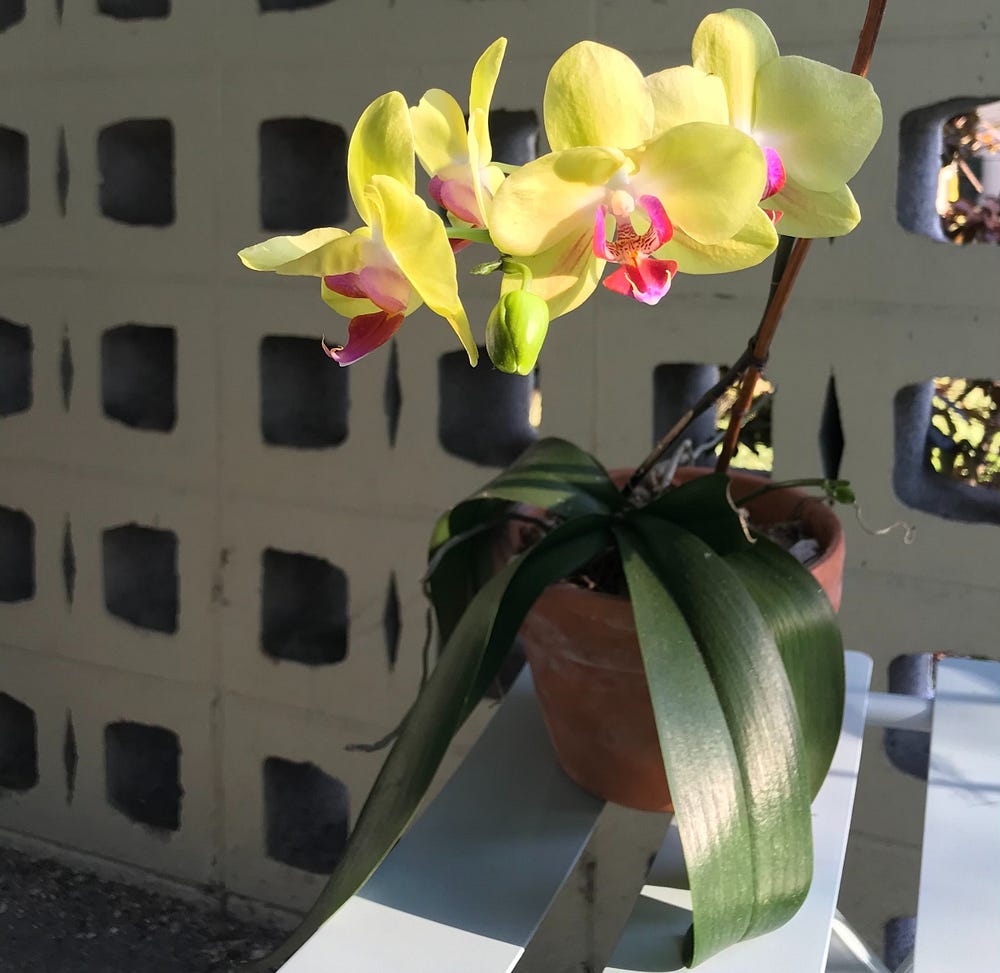
Orchid in my carport, photo available in my stock album on Pexels

It was a sunny day in May. Florida was hot. Humid air drifted in from the Gulf of Mexico and swept over the city. My carport was alive with orchids, succulents, and seedlings. I bounced from plant to plant with my elastic hose, wearing gray headphones and listening to a crime drama.

I was blithely unaware of the world behind me, until I heard someone shout from beyond my headphones, but I ignored it.

Finally, louder, I heard “HEY!” and turned around.

Before me, near the entrance of the carport, was an older gentleman in a long-sleeved denim shirt, dark blue shorts, and black boots capped with white tube socks. He wasn’t too tall or very built. His knotted gray hair was kept back by a ball cap. His stance was normal, although he held one fist to the side of his leg. An aroma of mold, whiskey, and body odor, wafted my direction.

“Excuse me?” I asked, removing the headphones and holding them at my side.

With my acknowledgement bestowed upon him, he leaned into his query like a magician, tipping from front to back on his toes.

“Are you the one with the bike, going vroom, vroom, vroom, at 3 a.m. last night?”

“I don’t have a bike.”

“Or a scooter, then?”

“I don’t have a scooter,” I answered back, the annoyance growing in my voice. I kept my thumb on the trigger of the hose and looked at him bewildered. I took a few more steps in his direction, as I couldn’t quite hear what he was saying in his normal speaking voice.

“What about your neighbor?”

Frustration abounded, he wasn’t listening to my responses, and was acting weird. It felt like it was time for him to go.

I activated my crazy eyes, hunched forward, and with deliberate over-annunciation replied, “Neither of us have a bike, motorcycle, or scooter.” I waggled my hand back and forth to indicate both my neighbor and myself, as well as accentuate the meaning of the words. Subconsciously, I was probably trying to sweep him away and back to the sidewalk.

I don’t hate homeless people. I had some homeless friends when I was in my early 20’s. With no family or wealth-connections, I found myself between rentals, and more than once, lived out of a car while I worked to get back on my feet. I also have a history of working multiple jobs and acquiring bad roommates who don’t pay bills. I know what it’s like to be down and out; I know what it’s like to be a nobody.

As Robert W. Fuller says in Somebodies and Nobodies: Overcoming the Abuse of Rank, “nobodies are not an easily identifiable group… But there’s one important thing they all have in common: the experience of being dominated, degraded, exploited, or insulted by people with greater power than their own.” (link)

I wasn’t about to give this man power over me, nor was I going to let him act like I was some privileged brat with a scooter keeping my neighbors up at night.

He looked almost stunned when I bluntly informed him that he was mistaken. However, a frown crossed his face for only a second, and he responded, “I was going to tell you to take it to the shop up on the corner — ”

“But we don’t have any so, thank you.”

“You,” I added, holding my hand up, “need to get off my property.”

“What’s wrong with you, girl?!” he shouted in defense.

My front door whipped open after that.

“What’s all this yelling?” my then-husband shouted at me and the bum.

“Yeah! That’s what I said!” the bum yelled, back towards my direction.

“Why are you yelling?!” my husband yelled at both of us.

What the heck? I thought to myself. For a brief moment, it felt like the two of them were ganging up on me.

“No, I’m talking to you! You gotta go!” he barked at the homeless man.

The stranger threw down whatever it was he was holding and partially turned away. His words jumbled into a knot of anger.

Physical intimidation isn’t something that comes naturally to women, so I like to think he was surprised when I arched my back and held my arms out in the classic, “come at me, bro” stance.

“What?” I asked, approaching him, “You gonna go?”

He called me the b-word and a few other fun names.

I slung my hands back again, and asked, “What did you call me?”

He made a little mocking gesture, threw his hands on his knees, stuck his butt out, and said “I’m so scared!”

Before he could finish his sentence, I unleashed the hose directly at his face.

He walked across the yard after that, but called me the b-word again, so I turned and gave him a second shower until he was out of range.

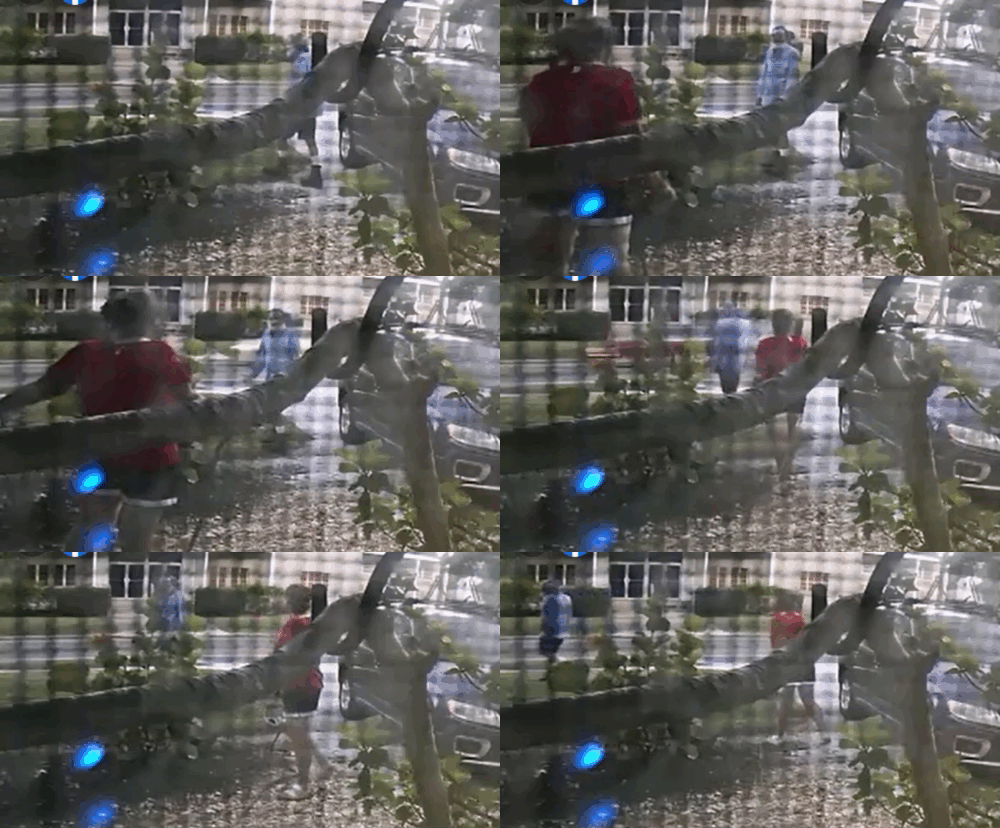
If anyone is wondering, my neighbor thought it was hilarious, the video footage is hysterical, and what dropped out of his hand was half of a plastic doll and a clump of Spanish moss.

Even though it ended up a somewhat funny situation, I shouldn’t have been so heated when he called me names nor as frustrated when he kept pressing the issue of a scooter or motorcycle. If I had to do it over again, I would have set the emotional tone early, and asked him to leave me alone, in a calm and kind way. If he still ended up yelling, I wouldn’t have yelled back. Also, in my new version of events, I wouldn’t have anyone else yelling at this man either. Don’t get me wrong, he was rude and a jerk, but I could have acted better.

More than anything, I hate getting yelled at. When it happens, my heart races, my limbs shake, I sweat, and my brain short-circuits worse than usual.

Maybe, in this situation, I was the one who needed the spray down instead.


Me, the idiot with the hose… in .gif form. 


Thursday, August 4, 2022

New Nonfiction, Butler Road

Hello, I've been hard at work on my next collection of poems and also on a few horror thrillers, but have made a breaks in order to continue my work as Sunny Lancaster within the realm of nonfiction.


On the sidebar and below, you can read the newest addition to this portfolio, Butler Road


Butler Road


“Those who can’t do, teach,” he said. His hand wrapped around the steering wheel, while the free one reached up to wipe the condensation from his forehead. He stared at the road ahead and was likely referencing my mother’s new career. He was the one who left, but was insecure about her becoming a competent, independent woman. He’s always been mean like that, threatened by the success of anyone; he was threatened by the smallest things. 

He had a double chin, chestnut hair, and high cheek bones. Most of my life, he was pudgy and the rest of the time, he was a "two-ton Sally," although he'd never admit it for long. None of us in the family won the genetic lottery when it came to metabolism, as all my relatives struggled with weight. My grandparents were large, my aunt was both tall and rotund, my extended family too, all were old and quite big. I was the fattest kid in my kindergarten class, and stayed hefty as the years progressed. 

When they were married, things were one way. When they split, things were the same, but amplified.

My mother ate pan-seared ground beef with pepper and ketchup. She also made dry, oven-baked chicken. I'd watch her from the door frame, my hands held on to the white molding, and I'd do my best to hide my body in the darkness of the dinning room. She cooked in disposable, foil pans, and sprinkled on pepper from the shaker from atop the stove. Then, she'd set the oven, turn her back to me, and walk into another room.  

She didn't really do meals. Sometimes we had dinner, other times she'd eat once a day, and on others, nothing at all. It all caught up to her eventually. She didn't do well living on her own.

At first, my father left and I saw him drop pounds pretty quickly. During one car ride to his apartment, he bragged to me about his diet of one or two breath mints a day. He went on and on, electrified by the prospect, wondering out loud just how thin he could get. 

He didn't make it very long. It was unsustainable. A year or less later, he got hooked on opiates from his back and spine doctor. This new bodily chemistry made his emotions take off like a roller coaster and his appetite increase. As the dependency took priority, his memory short circuited.

Obviously, I tried the breath mint diet too, but I was a bottomless pit. It didn't go well, nothing did. I guess eating to cope is just in the genes. It took a long time for me to understand that the extreme highs and lows of my father’s mood were likely due to his inconsistent diet, although I’m sure the pills, alcohol, and traits of narcissism didn’t help either. 

Butler Road was an amazing stretch out in the country, smack between two small towns, just north of Baltimore. During the 90’s, it had open fields, large mansions surrounded by horse pastures, and a handful of historic, stone houses with dappled, garden walls made of the same brown and gray rock. There were old-growth trees and the land was flat, although much of Maryland is rich in rolling hills, or was at the time. 

In the last few decades, much of farmland has been replaced by newly built houses, each cluster sat on a cul-de-sac, court, or small street. Part of me wonders when the entire state will succumb to one long, unbroken chain of housing developments. I often wonder if places like Butler Road still exist, or are as beautiful as they once appeared. 

It was a cloudy day, one with thick, soupy, rain clouds padding the sky. During long car rides like this one, he took the opportunity to dump his chaotic advice and wandering ideas onto my fragile mind.

We had finished the days’ appraisal appointments, and were cutting across the state to return home. He didn’t work for any bank specifically, instead contracting for anyone who would have him, choosing the entire middle of Maryland as his territory. He appraised slums in the hood, houses where the walls moved from infestations of roaches, to houses that were so large and grandiose, that most of the population couldn’t fathom the square footage of living space equal to, or larger than, a multistory department store. Most of the time, he assessed average homes, those scattered and dotted within the state, belonging to families or credit unions, depending on circumstance, or life’s happenstance. 

I didn’t understand much of that then. His job was nothing like any of my friend’s dads had. In totality and essence, he was nothing like any of them. His personality was a level of inconsistency that kept me timid, a fact he’d often read and criticize, when feeling so bold.

My lips were too big. My stomach was too fat. I was too soft. I was too stupid. I was too smart for my classmates. I really understood things. I was wise beyond my years. I was the most immature person he'd ever met. His criticism was followed by praise, and then followed criticism again, so I’d try to steer the conversation to anything other than myself, which would always lend itself to the “advice” he spewed like a fountain.

He was a man who was erratic and hypocritical within his opinions and beliefs, and yet he couldn't stand to be wrong. He'd twist any sentence to suit him and argued details far past the expiration of their significance.

The car in front of us was driving 35 miles per hour. The speed limit was probably 35, but it could have been 40. My father drifted forward, closing the gap. He got so close to the bumper ahead of us, I could see the white hairs on the back of the driver’s head. 

Without so much as word, he jerked the wheel, narrowly missing the back corner of the other car, and accelerated. We darted parallel, into the lane for oncoming traffic. 

The road was freshly paved, with black asphalt and sporting a golden, double line. At first I turned to my window, trying to look at anything or anyone but him. I tried to look out past the other car, as the fields and barns, houses and trees.

He pressed the gas,

The car beside us did the same, zapping me back to reality, as I watched his car door stay next to us and linger ever closer.

Panic hit me. My father chirped like a sparrow, "You want a race, motherfucker?" 

He truly beamed. His red-faced smile gave way to laughter, and I recoiled from the sharp, high pitched sounds that erupted from his throat. I found myself glancing at the dashboard.

The speedometer reached 50, then 60, and then 65, but the other man matched us at every interval. The white sedan wasn’t fazed at all by this race, kept pace and stayed beside us, and both vehicles rapidly approached the stop sign at the end of the stretch. My father's words noodled out of him in spectacular fashion, many new combinations of curse words and threats, were yelled in my direction, at the other car just beyond me. 

He grimaced, red-lined past 80, and got in front of the other car. It was just in time to decrease to around 40 miles per hour and make an unstopping, left turn onto another road. We missed the ditch, but it was close. 

Both of his hands were wrapped tight and his knuckles were white. Sweat swamped his forehead and down his cheeks. One side of his mouth still smiled.

He then set his sights on me. He cussed me out, just as he did that old man, his vitriol and malice dripping from every word. He spat my name in the anger at the end of every threat. 

I had yelled and pleaded for him to stop, at around the 65 MPH mark, interrupting his diatribe, yelling over his laughter, and ruining his fun. 

After his rant ended, he followed with some guilt, and then a complex explanation that amounted to nothing. He then gave me the silent treatment the rest of the way home. It was both a burden and a relief wrapped into one.


Friday, June 3, 2022

The Absurdity in Wonderland

 This is a nonfiction story of the first time my father told me a story. Writing about my family is the only way I've come to understand them and my relationship with them. I hope you can join me in laughing at the absurdity of the events, rather than being cajoled into feeling emotional.


Into Wonderland


            I never figured out why he took me all the way up there. I always suspected some ulterior motive, somewhere within my head creases. I mean, he was out of his mind, high on bad thoughts and mania. What business did he have, bringing his daughter to an amusement park in Pennsylvania Dutch Country?

            It was pink, a pink outdoor castle. There were carnival rides, slides, and games. I wore a puffy jacket that made swishing noises when I flapped my arms. He watched me play coin operated games and stood at the bottom, while I rode down a pink tube on a potato sack. I was in hog heaven, lips stretched ear to ear.  

            He was distracted, like his attention was fully elsewhere, and although I tried to get him to play with me, he seemed like he would rather watch from afar. This was before cell phones, but the feeling he was busy talking to someone else persisted. Maybe that’s how he always was.

            I was six.

The mood flipped on its head. It went from reckless abandon to pestilent in an instant, so much so, that the color drained out from the world around us, leaving it bleak, black, and blue. He sunk to meet my gaze, with his hand on the bottom of my chin.

            “I’m going to tell you, what my father once told me.” He smirked and then forced down the corners of his mouth into a frown.

His eyes swallowed me.

            He was like a big, brown bear, sat snugly in a striped sweater, leaned over, and inches from my face.

            “When I was a little boy,” he began, in a sickly-sweet falsetto, “I was a spoiled boy. I always wanted more from my father, more, and more. It was never enough. Then, one day, when I was pitching a fit, bitching and moaning, about not having enough tickets to ride the damn merry-go-round, and my father takes me and turns me by the shoulders.”

            I shuddered, as if he grabbed mine from nowhere.

            He continued, “And when we turned, I saw… Now, this was in downtown Baltimore in the 1960’s, so you can just imagine what that was like. My father, your grandfather, then pointed, at this little boy, with a handful of crumpled tickets, and my father said to me, ‘Son, those tickets mean more to that boy than anything in the world’ and I was just taken aback, I looked and could see his eyes, then I noticed the little boy had holes in his feet, his shoes, and I felt so bad, for asking for more when all that other little boy had were those crumpled up tickets.” His voice turned into a rambling singsong. His cheeks were wet.

            There was a silence between us, as he seemed both satisfied and empty.

            In a tiny voice, I asked, “Did you give him your tickets?”

            He tilted his head with an exasperated expression, and as if I had no right to respond, and blurted, “I don’t think you understand the meaning of the story, and that makes me deeply sad.”

            His words and emotions went in, but they didn’t have an effect. Instead of guilt, I felt confusion; instead of shame, I was closer to stunned.

            More cautious than ever, I tried to clarify. “I asked if you gave him your tickets, like a nice thing to do, since he didn’t have any.”

            The air hung like suspended pennies, my chest tightened, and ghosts lingered in the peripheral.

From my perspective, the only logical, moral end to the story was obvious. I was just a kid, but I knew adults wanted us to share stuff, so much so, that it was repeated in classrooms and media all the time.

I guess he couldn’t stand to be outdone. Or maybe, he hadn’t thought that far ahead yet, choosing to get swept up in emotion rather than having a point. Either way, my father had a contingent lesson to instill: blatant, relentless sadness was virtuous. So, be sad. Feel unworthy. Hurt people.

Eventually, he taught me this over and over, through parables of intense emotion. His wording, the high tone of his storybook voice, his eccentric hand motions and little jabs at my character, all said the same thing to me: I could never be sad enough to win him over.

My confusion then, escalated.

Directly after his morally draining story, we entered the park’s souvenir shop and he told me to pick something. I thought it was some kind of test, so I didn’t, and that upset him further. I hemmed and hawed. He increased in moist, red-faced exasperation, and the clerk was staring holes into us. I hated being the kid of the crazy adult.

I got a cheap, resin cast ring. It held a pastel rainbow, suspended in clear blocks, and my little kid fingers were so fat, I could only wear it on my pinky. It was almost pretty and made in China.